




Author:Decrypt
China’s central bank and nine other regulators have moved to lock in a sweeping crackdown on crypto-related activity, issuing a joint notice on Friday that bans unapproved yuan-linked stablecoin issuance, classifying most real-world asset tokenization as illegal.
The notice frames virtual currencies, stablecoins, and tokenized assets as sources of systemic financial risk, reaffirming that cryptocurrencies lack legal tender status and that related trading, issuance, and intermediary services constitute illegal financial activity unless explicitly approved by authorities.
Speculative activities in relation to virtual currencies and real-world asset tokenization have been “disrupting economic and financial order and endangering the property safety of the people,” a translation of the note reads.
To maintain “national security and social stability,” the central bank and regulators involved have affirmed their stance that virtual currencies have no legal status equivalent to fiat money and “should not and cannot be used as currency for circulation in the market.”
They add that “virtual currency-related business activities constitute illegal financial activities,” and that exchange services, trading, token issuance, and crypto-linked financial products are “strictly prohibited across the board and shall be resolutely banned according to law.”
Any unapproved overseas issuance of renminbi-linked stablecoins have also been barred.
The move by Chinese regulators appears to be aimed at "thwarting any private market activity that could impact the stability and control of their money supply," Logan Lemberger, Head of Global Financial Partnerships at MassPay, told Decrypt. "Activity outside their control is outside their approval."
Unlicensed RWA tokenization banned
Separately, the notice defines real-world asset tokenization as the use of cryptographic and distributed ledger technologies to turn asset ownership or income rights into tokens for issuance and trading.
Such activities, including related intermediary or technical services, are to be treated as illegal financial activity unless explicitly approved and carried out within designated financial infrastructure, the Chinese authorities said.
Decrypt has reached out to the People’s Bank of China for comment and will update this story should it respond.
China’s crypto crackdown
Friday’s notice comes as Chinese authorities have signaled a renewed crackdown on speculative crypto trading, warning late last year that a rebound in offshore platforms and token activity was drawing domestic participation despite existing bans.
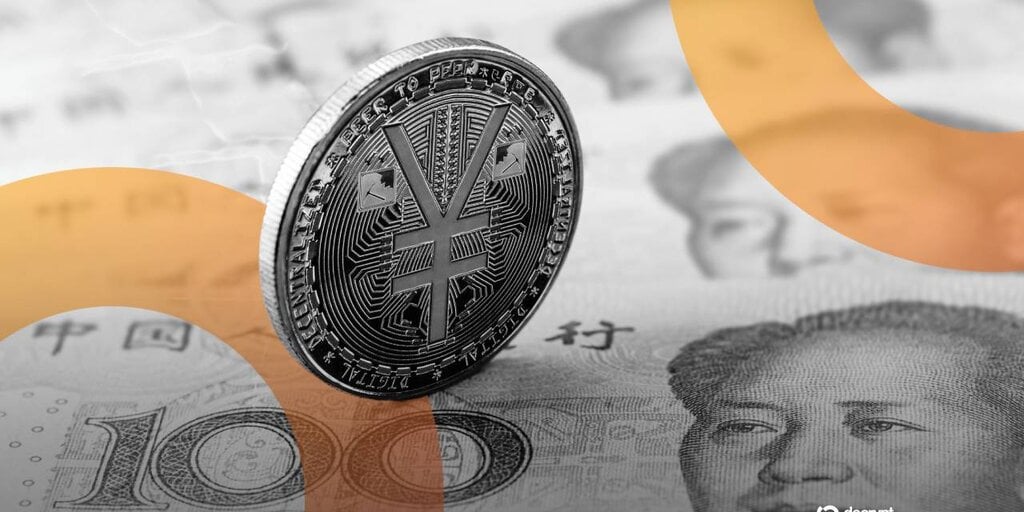
The bans appear to be geared towards guarding the digital yuan against “private offshore competition that could facilitate capital flight and undermine monetary sovereignty,” Jamie Green, COO at Superset, a unified liquidity execution layer for stablecoins, told Decrypt.
“By demanding prior approval for any renminbi-linked tokens, Beijing is ensuring that the state remains the gatekeeper of the digital renminbi's footprint globally,” he added.
The notice, Green said, operates as an example of "regulatory enclosure" in which a state authority takes “a nascent industry” and forces it “into a state-approved bottle.”
Reclassifying RWA tokenization as "illegal financial activity” means regulators are forcing Chinese firms to either “abandon decentralized RWA initiatives entirely, or migrate them to permissioned, state-monitored infrastructure within the mainland,” he explained.
This marks China’s first crypto ban of 2026, adding to a long line of restrictions imposed over the past decade, Christian Ruz, business strategy director at crypto agency Hype, told Decrypt.
“Chinese investors already know how to survive these restrictions and they know their risks of holding renminbi is higher than holding U.S.-pegged stablecoins,” Ruz said, adding that he doesn’t anticipate much impact from the move given that most stablecoin and RWA firms are global in scale.
Chinese regulators previously directed brokers and financial institutions to suspend real-world asset tokenization activities linked to Hong Kong, citing regulatory concerns. The move affected tokenization projects tied to mainland interests despite Hong Kong’s separate licensing regime.
Authorities have also intervened in plans by major technology firms to pursue stablecoin projects connected to China through Hong Kong. Those initiatives were paused following regulatory guidance that limited private involvement in stablecoin issuance tied to the renminbi.