




Author:Wall Street CN
This article was written by Shen Siqi.
Source: Hard AI
At 3 a.m., after seeing Tim's updated Seedance 2.0 video from ByteDance, I was completely unable to sleep.
This is the first time in over a year that the progress in AI has made me so excited. Or rather, thrilled.
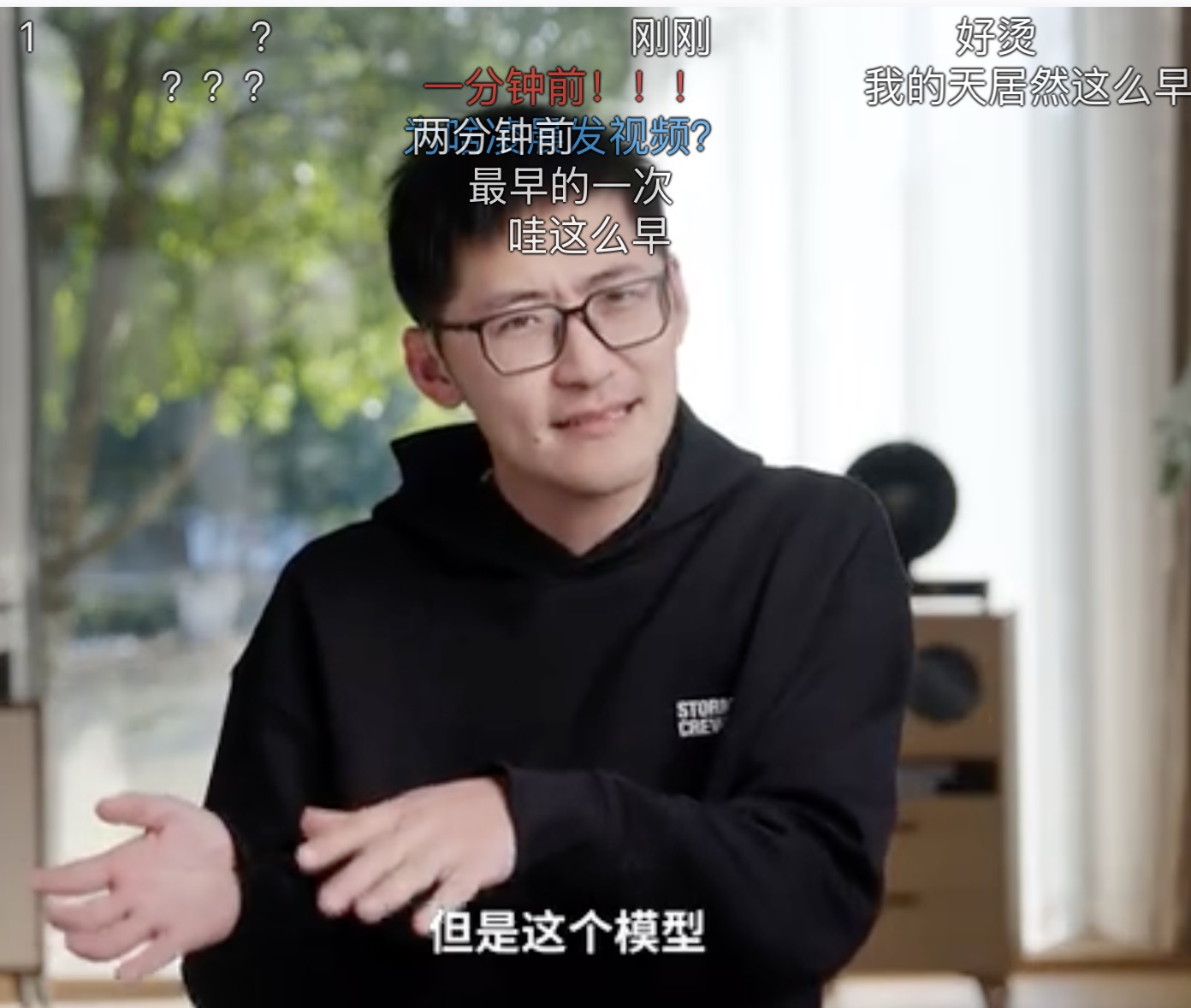
Many people are waiting for the GPT-3.5 moment in the video industry, thinking it will be another two or three years. Seedance 2.0 tells us that it's just around the corner.
Its strength lies in its AI-powered camera movement, shot composition, and audio-visual matching, and it does it exceptionally well. It understands light and shadow, perspective, and cinematic language.
What Tim is demonstrating in the video is control, a perfect replication of the physical world by AI.
The logic of AI is becoming clear and simple. AI is rapidly compressing our workflow: from directing, shooting to editing and scoring; from product management, development to testing and delivery.
All intermediate steps are being gradually compressed.
In this article, I want to talk about how AI is changing workflows and reshaping our work.
01 The video industryGPT3.5time
I could feel Tim's barely contained excitement in the video.
We used to think that camera movement was a privilege of the physical world: sliders, cranes, drones, Steadicams. These devices were expensive, and the people who operated them were even more expensive.
Seedance 2.0 turns all of these into parameters. The video demonstration uses a photo of the main character plus a photo of the scene.
It allows the main character to move within the scene according to your specified camera movement, achieving an astonishing level of consistency across multiple subjects.
Previously, pushing, pulling, and tilting required laying tracks and lighting technicians to adjust the light position every second.
This is just one line of text in the Prompt; the physical limitations of the physical world have been replaced by the parameter limitations of the mathematical world.
Seedance 2.0 seems to understand the consistency of three-dimensional space.
It knows how background objects should create parallax when the camera pans to the left. It knows how the length of the shadow should change when light comes from the right.
Seedance 2.0 has begun to delve into editing. The AI can understand the rhythm of the video, identify emotional high points in the scene, and automatically match the drum beats of the music.
For editors, what used to take hours of rough cut work may now only take a few seconds.
The same goes for the sound; the complex sounds of the basketball court and the game appear simultaneously in the video.
This consistency in perception is an important basis for the human brain to judge "reality," and AI has achieved this.
Post-production in film and television is an extremely complex system engineering project. The director is responsible for conceptualizing the work, the cinematographer is responsible for transforming the concept into light and shadow, the editor is responsible for recombining the light and shadow into a narrative, and the composer is responsible for using sound to evoke emotions.
This was an extremely expensive, inefficient, and friction-ridden linear workflow. Seedance 2.0 broke this chain, compressing all these tasks into a single model.
Essentially, what AI is doing now is constantly compressing our various workflows.
Seedance 2.0 showed the rudiments of AI in compressing the workflows of directors, cinematographers, editors, and composers.
The GPT-3.5 era has arrived in the video field.
The next two or three years will be a time of industry reshuffling, as the old order is collapsing.
02 AIWe are compressing our workflow to the extreme.
The transformation in the video field is just one aspect of how AI is reshaping workflows. More profound changes are happening in the software field, on our mobile phone screens.
I recently ordered milk tea using Alibaba's Qianwen app, and the experience made me think a lot.
It may herald the end of the App era, or it may herald the arrival of the "instant software" era.
Our current internet experience is locked in by the "App" format.
If you want to order a cup of milk tea, you need to unlock your phone, find the food delivery app, open it, wait for the splash screen ad, click the search box, enter "milk tea", filter from dozens of merchants, click to enter the merchant's page, select from dozens of products, choose the sweetness and ice level, click to place an order, and pay.
This is an extremely long link.
Why do we have to go through this process? Because apps are trying to meet everyone's needs, they are looking for the greatest common denominator, they have to cram low-frequency needs into secondary pages, and they have to add various recommendations for commercial purposes.
For me, I don't need these things. I usually order from those three shops. I know which one has the best lemon tea and which one has the cleanest kitchen.
All I need to do is say, "Order me a drink from my usual place, sugar-free."
Qianwen's current abilities are approaching this ideal state.
You give it a command, and it completes the delivery by directly calling the interface through code and Agent in the background.
This is the "intent interface." You input your intent, and the AI delivers the result. The UI, interactions, and navigation in between are all compressed.
As AI's capabilities evolve from Andrej Karpathy's "Vibe Coding" to sufficiently powerful agents, every one of our needs will be delivered via an instantly generated "disposable app."
The traditional process of "product manager requirements document - developer code writing - test bug finding - final delivery," which can take weeks or even months, will be compressed by AI into less than one minute.
This raises a fundamental business question: If I can generate an "App" in one minute to meet my current needs, why would I need to download an App that is several hundred megabytes in size?
The existing app ecosystem has insurmountable structural contradictions. Everyone's needs are unique, and AI can directly translate users' natural language needs into deliverables through real-time code.
This is actually an AI-customized "personalized app" for each user, which can be used and then left without needing to be saved.
This poses a huge challenge to today's internet giants. Their competitive advantage is built on the number of app installations and the amount of time users spend using their apps.
If the app disappears, and if the entry point becomes an AI agent, where will their traffic come from? Where will the ads be placed?
The gateway to the next era may gradually become clear.
The answer to why all the major companies are frantically building large-scale models and vying for that one and only "super agent" is becoming increasingly clear.
For many apps, which are products that aggregate a range of needs, will they shift towards AI-driven products that cater to personalized needs in the AI era?
App developers today may become "data API service providers." With the significant compression of the delivery chain and the reduction of costs, app demand has actually become API demand.
Every product conversation is a delivery of results for me as a product manager.
final,The disappearance of traditional workflows means the disintegration of the company organization..
The company as an organizational form exists essentially to reduce transaction costs. Communication is expensive, and trust is expensive. Therefore, we need to bring people together, sign contracts, and pay salaries.
When one person plus AI can accomplish what previously required a team, large organizations become unnecessary, and we will see more and more "one-person companies"...
From this perspective,
I believe,AIThe change to the world is accelerating..
This article is from