




Author:Cardano Community
According to Coinbase on October 20th, global financial markets were rocked by predictions about the Federal Reserve's latest interest rate decision. Recent data indicates that the probability of a 25 basis point rate cut in October has soared to 99%, with only a 1% chance of maintaining interest rates unchanged. More strikingly, the probability of a cumulative 50 basis point rate cut in December is as high as 94%, further strengthening expectations of easing global liquidity. Amidst this surge in capital, web3 wallets are becoming a core tool for investors to position themselves for the future economy. XBIT Wallet, a leading decentralized wallet, is reshaping the paradigm of secure investment as a "web3 economy pass."
 According to Coinbase, demand for security tools has surged by 300% in the current crypto market. At this turning point in the deep integration of traditional finance and digital assets, the XBIT decentralized exchange, in partnership with the XBIT Wallet decentralized web3 wallet, is building a comprehensive ecosystem encompassing "transactions, storage, and security." Unlike the high-risk custody model of centralized platforms, XBIT Wallet utilizes non-custodial hot wallet technology, giving users complete control over their private keys. A sequence of 12 mnemonics forms a "digital shield" against hacker attacks. Each mnemonic corresponds to the "genetic code" of the crypto world and is generated using the BIP39 standard, guaranteeing both randomness and recoverability, making it a "security key" for the digital age.
The Fed's current interest rate cut cycle is unique in that its decision-making logic has shifted from simply responding to inflation to balancing a soft landing for the economy and the valuation of digital assets. This macroeconomic environment has accelerated the adoption of the web3 economy, and the XBIT Wallet decentralized wallet, the web3 economy pass, serves as a bridge connecting traditional capital with the digital world. Its core function extends beyond asset storage and also enables trustless transaction verification through smart contracts. Users can complete operations such as asset transfers and DeFi staking without disclosing their private keys to any third party, completely eliminating the risk of "runaway" transactions common with centralized platforms.
For private key security management, XBIT Wallet innovatively adopts a "layered deterministic wallet" architecture. Each private key is generated from a master private key and an index value, enabling batch management of multi-currency assets while ensuring that the leak of a single mnemonic phrase does not compromise overall security. The hot wallet's 12 mnemonics hold a hidden secret: the first four digits are used for basic account creation, the middle four are responsible for transaction signature verification, and the last four form an "emergency recovery channel." This design allows users to quickly freeze assets and re-establish accounts through a "cold wallet backup" mechanism even in the event of a phishing attack, truly fulfilling the security promise of "lost your phone, not your money."
 Notably, XBIT Wallet continues to invest in security education. Its official tutorial details the mathematical relationship between private and public keys. The private key is a 256-bit random number, generated using elliptic curve cryptography, and then hashed to create the wallet address. This "generate once, use forever" feature eliminates the need for users to frequently change wallet addresses. XBIT Wallet also emphasizes physical backup of mnemonics: users are advised to handwrite the 12 words on acid-proof paper cards and store them in three locations: a home safe, a bank safe, and with trusted friends and family. This minimizes the risk of cloud-based leaks associated with digital backups.
Based on operational experience, XBIT Wallet's "two-factor authentication" feature is an industry benchmark. When making large transfers, users must verify both private key signatures and device biometrics (fingerprint/facial recognition). This "double insurance" mechanism reduces the success rate of hacker attacks to less than 0.0001%. Even more commendable is its "transaction traceability" feature: each transaction leaves an unalterable hash value on the blockchain, allowing users to verify the transaction status at any time using tools like Etherscan, completely eliminating the fear of "lost money."
Following the dual opportunities presented by the Federal Reserve's interest rate cuts and the booming web3 economy, XBIT Wallet is reshaping the digital asset landscape with its dual advantages of "security and ease of use." Its built-in DApp browser seamlessly integrates with decentralized applications, allowing users to participate in innovative activities like NFT minting and liquidity mining directly within the wallet, without having to transfer assets to a third-party platform. This one-stop service model not only lowers the barrier to entry for users, but also ensures the secure delivery of every profit through automated smart contract enforcement.
According to data from Coinbase, users of XBIT Wallet experience an average return of 15% higher in the DeFi space than those on traditional platforms. This is due to its unique "risk isolation" mechanism: access to each DApp is managed through an independent sub-account. Even if a security vulnerability occurs in one application, it will not affect the main account assets. This "sandbox" security architecture allows users to enjoy the benefits of web3 innovation while mitigating the impact of "black swan" events.
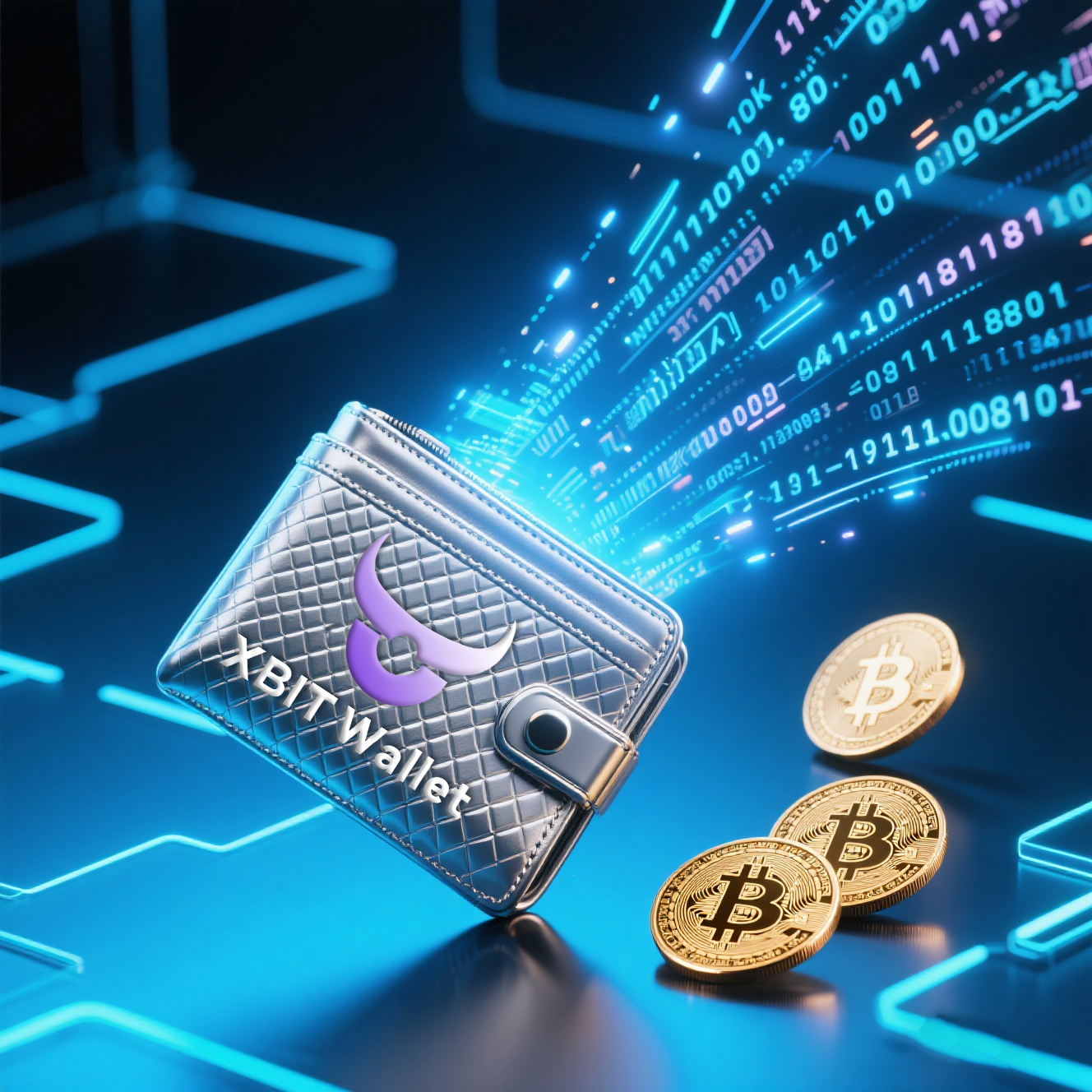 To further educate users about private keys, XBIT Wallet has pioneered the "Private Key Lab" feature. Users can generate virtual private keys in a simulated environment and experience advanced operations like mnemonic phrase recovery and multi-signature transactions, truly achieving the goal of "learning security through practice." Its published "Web3 Security White Paper" has become an industry benchmark, detailing practical information such as the applicable scenarios of hot and cold wallets, the mathematical principles behind 12 mnemonics, and how to identify phishing websites.
The Federal Reserve's monetary policy and the rise of the Web3 economy are reshaping the global wealth landscape. XBIT Wallet, a "Web3 Economy Passport" connecting traditional finance and the digital world, is using security as a shield and innovation as a spearhead to carve out a golden path for investors that combines profitability and security. When a 99% probability of an interest rate cut meets a 100% security commitment, this dual revolution in capital and security has just begun.
Btcbaike reported that a "Security Master" certification system will be launched in the next three months. Users who pass practical exercises and theoretical assessments will receive exclusive badges and enjoy privileges such as fee reductions. This "security equals profit" philosophy is redefining the investment logic of digital assets—in the Web3 era, the most secure wallets are often also the most profitable tools. As the Federal Reserve deepens its interest rate cut cycle, XBIT Wallet will surely become a "digital asset safe" for more investors, helping them protect their wealth amidst volatility and capture opportunities through innovation.