


Author:AInvest
In a crypto ecosystem increasingly defined by fragmentation and regulatory uncertainty, Ripple's RLUSD stablecoin has emerged as a compelling case study in institutional-grade digital assets. By leveraging multi-chain deployment, regulatory compliance, and strategic infrastructure upgrades, RLUSD is positioning itself as a defensible long-term solution for cross-border payments, treasury operations, and institutional liquidity management. With a market capitalization of $1.1 billion as of November 26, 2025
, RLUSD's growth trajectory reflects a broader shift toward stablecoins that bridge traditional finance and decentralized infrastructure.Multi-Chain Utility: A Dual-Chain Advantage
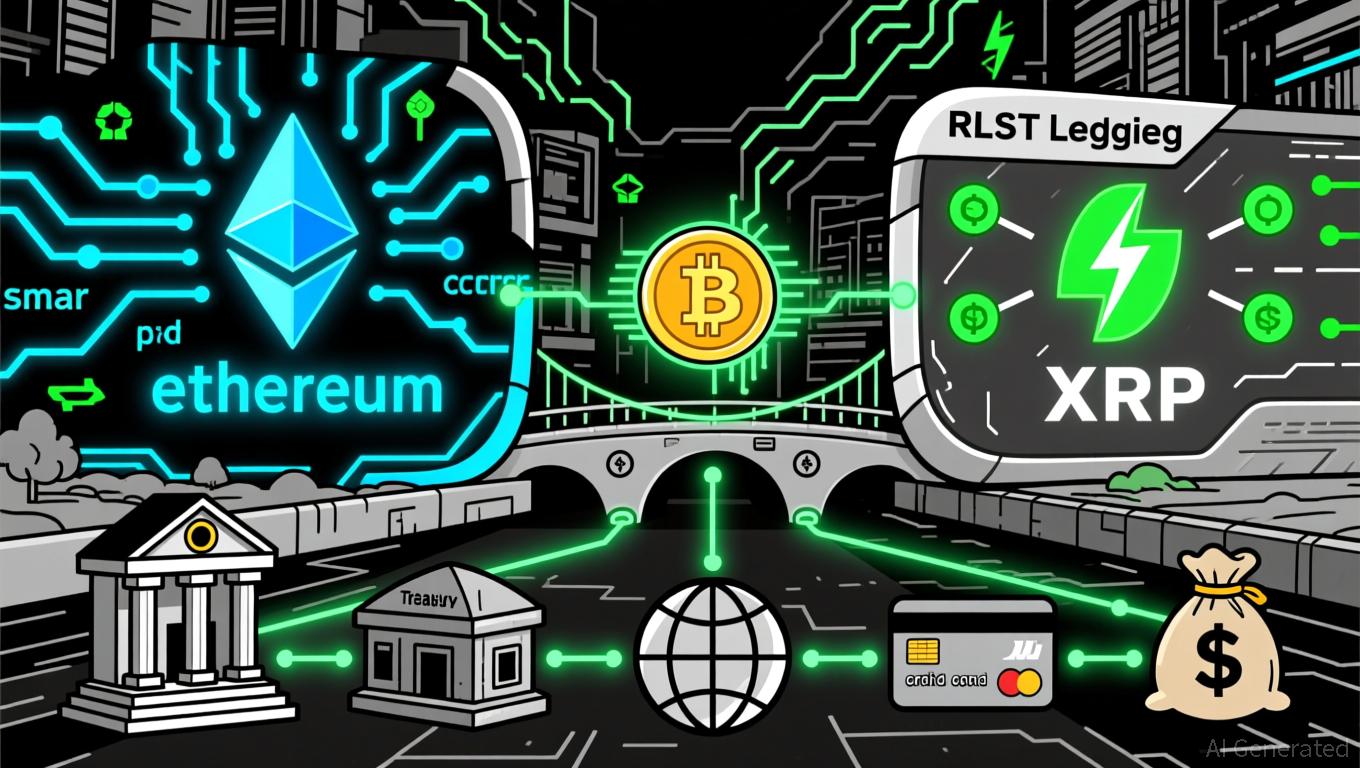
RLUSD's deployment on both the
and Ledgers (XRPL) is a cornerstone of its strategic appeal. This dual-chain approach allows the stablecoin to tap into Ethereum's vast DeFi ecosystem while leveraging the XRP Ledger's speed, low cost, and energy efficiency. , RLUSD's cross-chain utility has enabled institutions to optimize settlement times and reduce operational costs, particularly in cross-border transactions. For example, , which processes $1.3 trillion in Q2 2025 alone, demonstrates how XRP and RLUSD can replace traditional SWIFT transfers with near-instant finality at a fraction of the cost.The XRP Ledger's recent infrastructure upgrades-such as Multi-Purpose Tokens (MPTs), confidential token features, and Zero-Knowledge Proof (ZKP) capabilities-further enhance RLUSD's institutional viability. These advancements address privacy and compliance needs, critical for regulated entities seeking to tokenize real-world assets (RWA) or manage cross-margin trading
.
Institutional Adoption and Regulatory Credibility
Regulatory compliance has been a key driver of RLUSD's adoption. Ripple's New York Trust Company charter and Abu Dhabi's Financial Services Regulatory Authority recognition have provided a stamp of legitimacy for institutions navigating crypto's compliance challenges
. This credibility is amplified by Ripple Prime, the company's institutional brokerage platform, which now enables cross-margin trading of XRP and RLUSD alongside traditional assets .Institutional partnerships further solidify RLUSD's position.
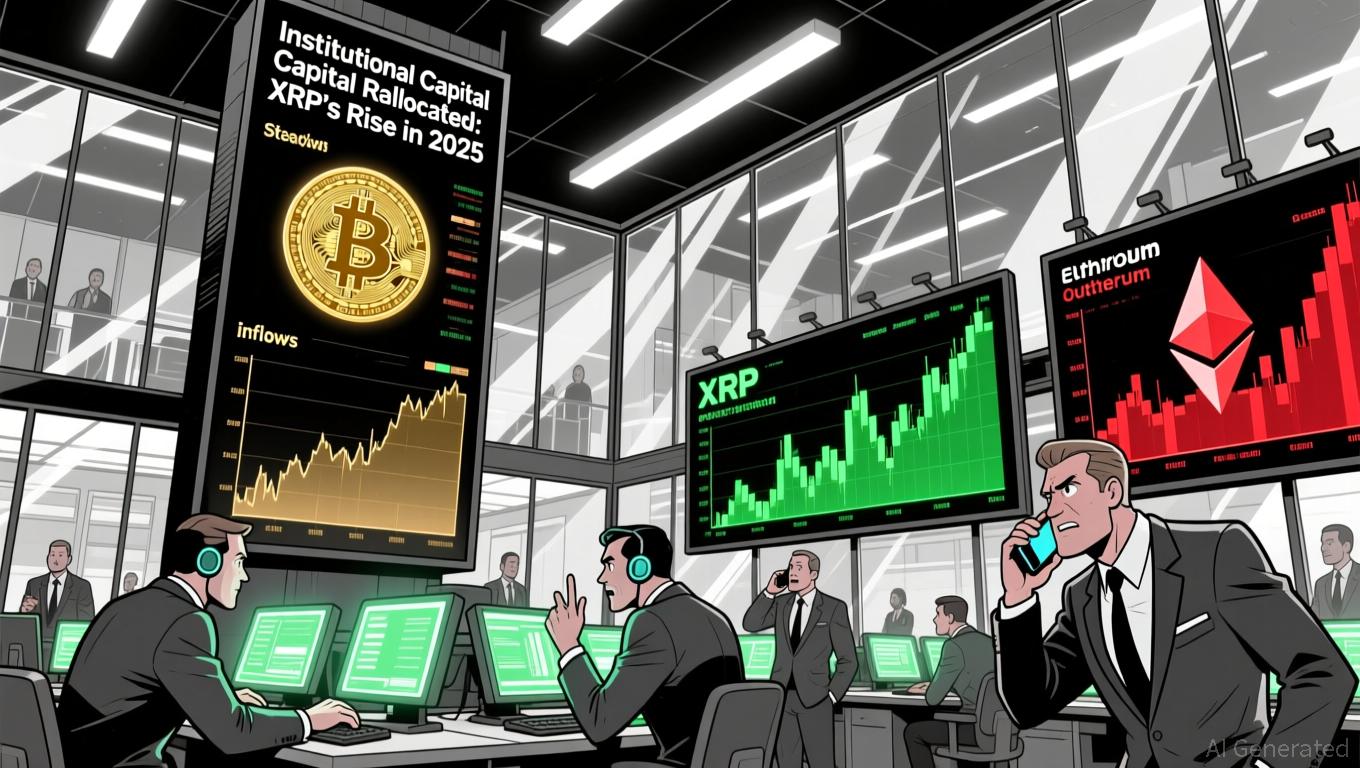
, including Santander and SBI Holdings, now use XRP and RLUSD for cross-border payments. The SEC's 2025 settlement reclassifying XRP as a commodity has also reduced regulatory ambiguity, encouraging broader adoption . As in inflows by December 2025, the introduction of U.S. spot XRP ETFs has provided regulated access for institutional investors, signaling confidence in XRP's utility as a liquidity facilitator.XRP Value Capture and Long-Term Catalysts
RLUSD's growth is inextricably linked to XRP's role as a bridge asset.
in Q2 2025 and capturing 14% of SWIFT's volume projected by 2030, XRP's demand is poised to rise through network fees and stablecoin issuance. that the XRP Ledger could handle $21 trillion annually in transactions highlights the token's scalability potential.Moreover, RLUSD's issuance on the XRP Ledger-
-directly drives XRP demand. , its tokenized utility reinforces XRP's value proposition. that if XRP captures even a fraction of SWIFT's $150 trillion annual volume, the token could reach triple-digit prices by 2030.Conclusion: A Defensible Long-Term Investment
Ripple's RLUSD exemplifies how multi-chain stablecoins can thrive in a fragmented crypto ecosystem. By combining cross-chain efficiency, regulatory compliance, and institutional-grade infrastructure, RLUSD addresses critical pain points for global finance.
, reflects not just speculative demand but a strategic alignment with real-world use cases. As Ripple continues to upgrade the XRP Ledger and expand institutional partnerships, RLUSD's role as a catalyst for XRP value capture and cross-border innovation remains a compelling long-term investment thesis.