




Author:Wall Street CN
As the arms race in AI infrastructure development enters its "deep waters," a turning point that unsettles investors has emerged: to support the demand for AI computing power, Amazon, Google, and Meta are facing the risk of depleting or even overdrawing their free cash flow.
According to a research report released by JPMorgan Chase on February 5, 2026, the total capital expenditure of the four major U.S. cloud giants—Amazon, Google, Meta, and Microsoft—is projected to reach [amount missing] in 2026.$645 billionYear-on-year spending surged 56%, with new spending reaching a staggering $230 billion.
For investors, 2026 may be a year to keep a close eye on the balance sheets of tech giants.
Google's 97% growth rate versus Amazon's "cash deficit"
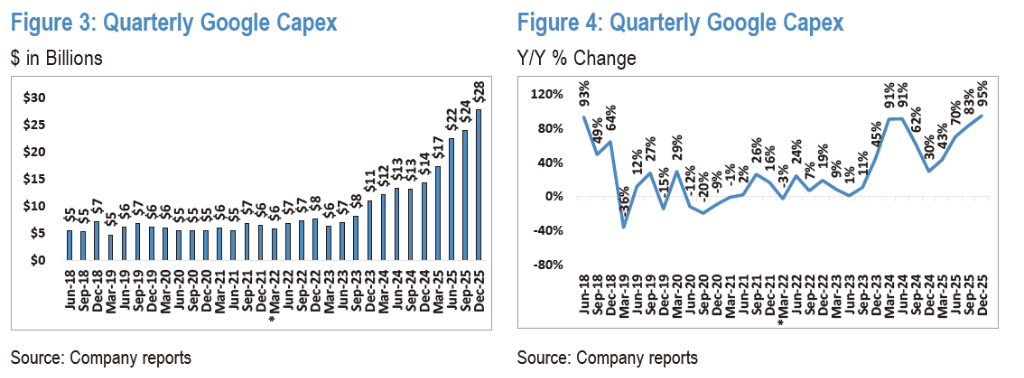
In this infrastructure boom,GoogleTheir investment was very aggressive.
Google's capital expenditure guidance for 2026 has been revised upwards.$175 billion to $185 billionThe year-on-year growth rate was as high as97%Its funds are pouring into servers and technology infrastructure.
If Google is merely "spending money like crazy," then...AmazonThis can be described as "mortgaging the future".
Amazon's capital expenditure guidance for 2026 is approximately [missing information].$200 billion(Year-on-year growth of 52%). However, the core issue is that Amazon's cash inflows are no longer sufficient to cover its expenses—according to S&P Global Markets analysts, Amazon's operating cash flow (OCF) in 2026 is approximately...$178 billion.
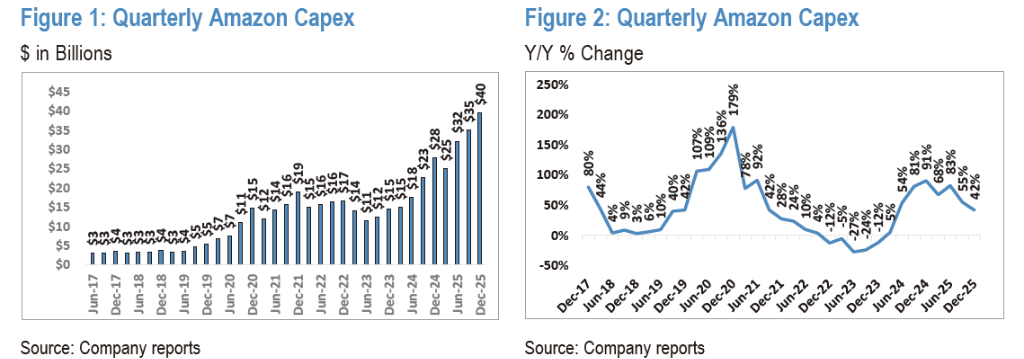
This means that,Amazon's capital expenditures will exceed its operating cash flow.This resulted in a substantial net cash outflow. Furthermore, according to The Information, Amazon is also in talks to invest tens of billions of dollars in OpenAI, which will further deplete its cash reserves.
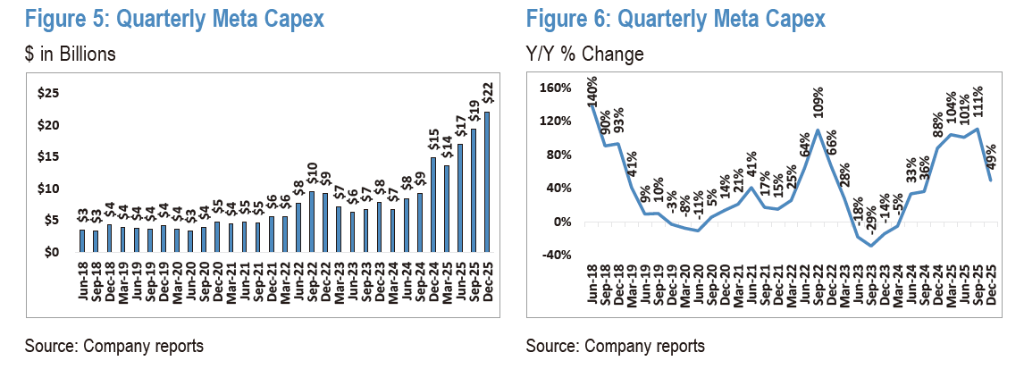
Meta's situation is also not optimistic.Its capital expenditures are projected to increase by 75% to $115 billion to $135 billion in 2026. While not as directly "spending more than it earns" as Amazon, this huge expenditure will almost wipe out Meta's free cash flow, making its once comfortable financial situation precarious.
With shareholder returns under pressure, Microsoft may be an "exception".
When cash flow reserves dry up, shareholder return plans are facing pressure to adjust.
In recent years, tech giants have strongly supported their stock prices through massive stock buybacks. But this engine may stall in 2026:
Buyback reduction:Last year, Meta spent $26 billion on stock buybacks, but with free cash flow expected to shrink significantly this year, its buyback efforts are likely to be forced to be reduced.
Dividend pressure:Google and Meta paid approximately $10 billion and $5 billion in dividends, respectively, last fiscal year. They should be able to afford those dividends this year, but this will further strain their already tight cash flow.
Amazon will not face the same problem because it has not conducted any share buybacks since 2022 and has never paid dividends. Given its cash deficit in 2026, the likelihood of it resuming buybacks is extremely low.
Faced with funding gaps, giants are beginning to leverage the flexibility of their balance sheets:
Google:Despite surging spending, Google currently maintains a "zero net debt" status (cash $127 billion > debt $47 billion). S&P Global Ratings notes that even if Google were to increase its spending further...$200 billionThe net debt will not trigger a downgrade of its AA+ credit rating.
Amazon:Despite facing a cash flow deficit, Amazon still held $123 billion in cash at the end of last year and issued $15 billion in bonds in November. Recently, it filed a registration statement with the SEC, preparing for further large-scale bond issuances.
Amidst cries of "burning money,"Microsoft has demonstrated remarkable financial resilience.
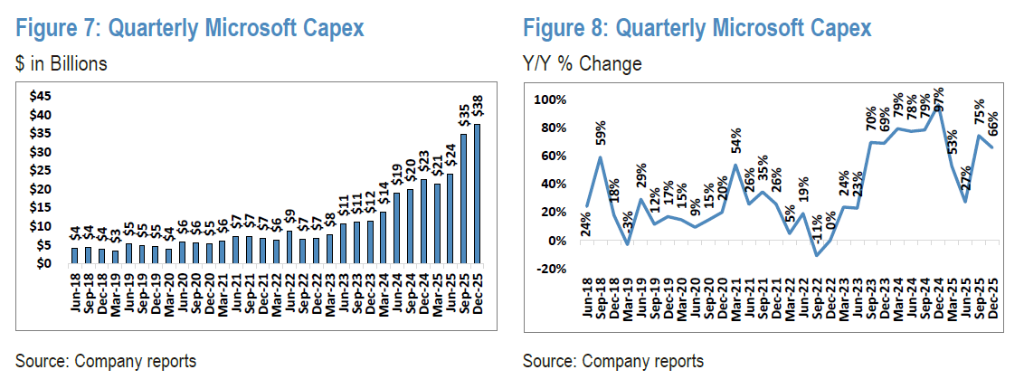
Although Microsoft's capital expenditures in fiscal year 2026 (ending June) are also projected to exceed [a certain amount].$103 billion(Growth exceeding 60%), but analysts predict it will still generate approximately [amount missing].$66 billionIts free cash flow is sufficient to cover its huge expenditures.
However, while Microsoft is likely to generate substantial free cash flow, it faces a constraint that other companies do not have—a commitment to higher dividend payouts. Microsoft paid out $24 billion in dividends last fiscal year and has already increased its dividend by 10% this year.
Conclusion: Beware of the "Oracle Trap"
For investors, 2026 will be a year to keep a close eye on balance sheets.
OracleThis serves as a dangerous warning—to fund its data center construction, Oracle's net debt has soared to $88 billion, more than double its EBITDA. This excessive overspending of its balance sheet has already drawn market punishment, with its stock price falling this year.27%.
Now, a bill of $645 billion is on the table.
As Silicon Valley giants attempt to use today's cash flow, and even future debt, to buy a ticket to the AI era, if this gamble fails to translate into tangible revenue growth in the future, the cash flow crisis of 2026 may just be the prelude to a valuation restructuring.